How the thyroid affects your menstrual cycle
Thyroid problems can change your periods, sometimes before other symptoms appear. Learn when to get your thyroid checked.
Published Updated 3 min read

It’s a small gland in your neck, but it affects almost everything: your metabolism, weight, mood, heart, and, of course, your periods. Thyroid problems are common in women, but they’re not always easy to spot right away. Here’s how the thyroid is connected to your menstrual cycle and when it may be worth getting it checked.
Thyroid hormones play a role in how the ovaries work
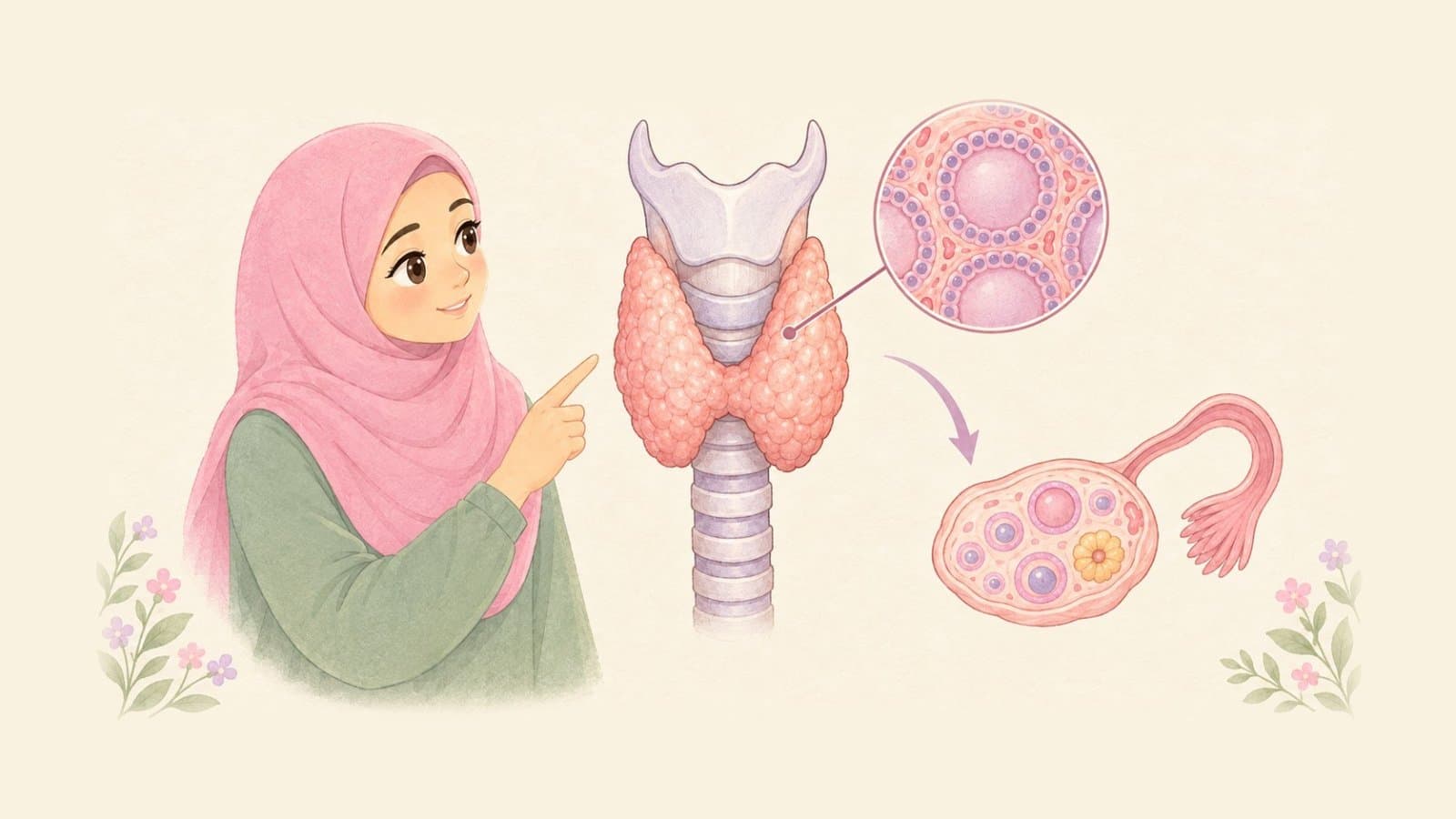
The thyroid makes hormones that regulate the speed of metabolism in all the body’s tissues, including the ovaries and uterus. The pituitary gland controls its activity with thyroid-stimulating hormone (TSH). When thyroid hormone levels are too high or too low, the production of sex hormones, blood clotting, and egg maturation can all be affected.
Thyroid problems can change your periods
The U.S. Office on Women’s Health notes that having too much or too little thyroid hormone can make periods very light, heavy, or irregular—and sometimes stop them for several months.
- With hypothyroidism, when hormone levels are low, periods are more likely to be heavy and last a long time. In one study, heavy periods occurred in 33% of women with overt hypothyroidism, compared with just 6% of healthy women.
- With hyperthyroidism, when hormone levels are high, periods are more likely to become light and infrequent.
- Both conditions can disrupt ovulation and make it harder to conceive.
In another study, thyroid problems were found in 44% of women who sought medical care for menstrual cycle problems.

Other signs can help you spot a problem
- Hypothyroidism: fatigue, sleepiness, feeling cold, dry skin, hair loss, weight gain, constipation, and low mood.
- Hyperthyroidism: a racing heartbeat, sweating, trembling hands, anxiety, weight loss despite a good appetite, and poor sleep.
Symptoms are often subtle and can feel like ordinary tiredness, so a diagnosis can’t be made without a blood test.
Start by checking your TSH
If your cycle changes, your periods are very heavy or stop, or you’ve been trying to conceive for a long time, your doctor will usually order a blood test for TSH and, if needed, free thyroxine. The American Thyroid Association recommends checking TSH in all women seeking help for infertility. Thyroid hormones are also important for a baby’s development. An endocrinologist will choose your treatment, and treating a thyroid problem may improve cycle changes caused by it.

Taking thyroid medication during Ramadan takes planning
Levothyroxine, prescribed for hypothyroidism, is usually taken on an empty stomach, 30–60 minutes before eating. Avoid taking it at the same time as coffee or dairy, and separate calcium or iron supplements from it by at least 4 hours. During Ramadan, a convenient option may be to take the tablet 30–60 minutes before suhoor or at bedtime, at least 4 hours after your last meal. Discuss the best schedule with your endocrinologist. If your dose or routine changes, ask when to recheck your TSH; it is generally checked about 6–8 weeks after a change.
If you have hyperthyroidism or are still adjusting your treatment, fasting may be difficult because of a racing heartbeat and weakness. In these cases, discuss fasting with your doctor and imam, as Islam allows concessions for people who are ill.
The thyroid is small but very important. If your cycle changes for no obvious reason, a simple blood test may help find the answer and guide you toward better health.
This article is for information only and does not replace advice from a doctor. If something worries you, talk to a healthcare professional.