How the ovaries work and what to know about their health
The ovaries produce hormones and store eggs, but myths about fertility and ovarian health are common. Here’s what to know and how to care for them.
Published Updated 3 min read

The ovaries are about the size of walnuts, yet they affect hormones, the menstrual cycle, the ability to become pregnant, and even bone health. There are many myths about them—from the idea that “a supply is used up every month” to the claim that a single hormone test can predict the future. Here’s how the ovaries work and how to care for them.
The ovaries produce hormones and store eggs
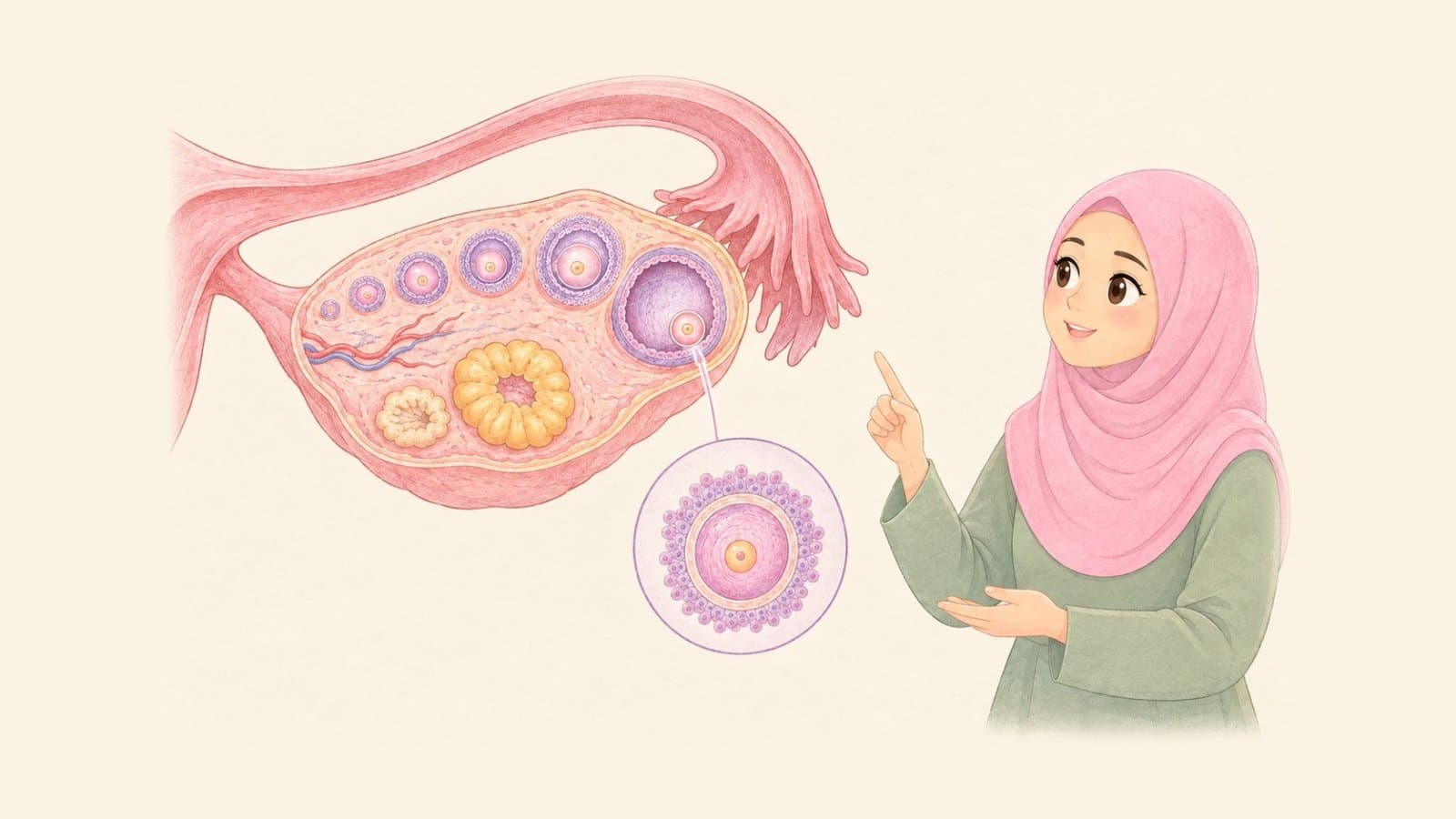
A woman has 2 ovaries, located on either side of the uterus. Eggs mature in the ovaries, which also produce estrogen, progesterone, and small amounts of male hormones. These hormones regulate the menstrual cycle, support bone, skin, and blood vessel health, and affect mood and sex drive.
The egg supply is established before birth
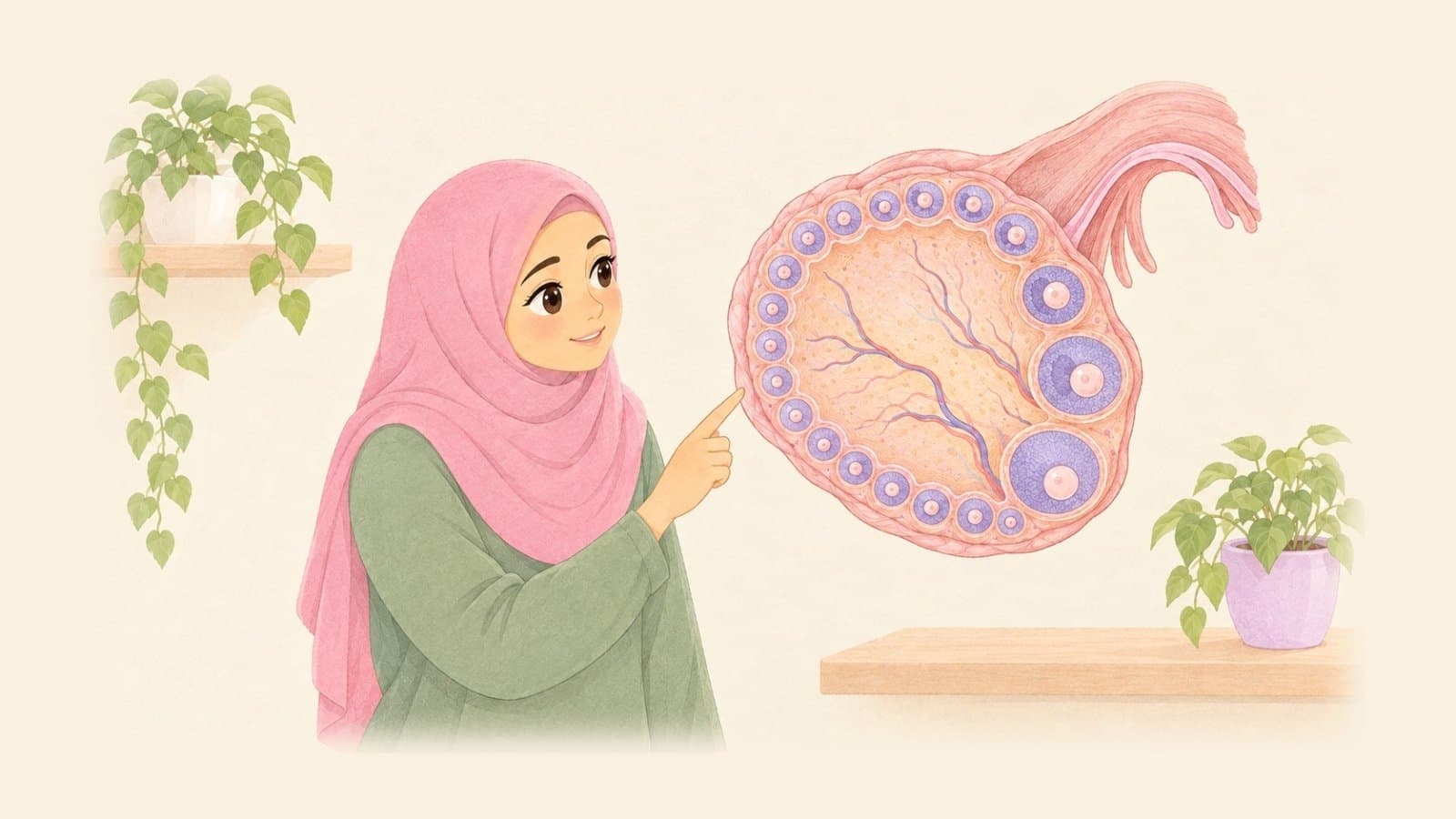
The American College of Obstetricians and Gynecologists (ACOG) gives these estimates. The number of eggs peaks at 6–7 million in a fetus at 20 weeks of development. There are 1–2 million at birth, 300,000–500,000 by the start of menstruation, about 25,000 by age 37, and about 1,000 by age 51. Only a few hundred mature and are released from the ovaries over a lifetime; the rest gradually break down. The chance of becoming pregnant decreases with age, and menopause begins when the supply is nearly depleted.
An AMH test cannot predict natural fertility
Anti-Müllerian hormone (AMH) reflects the number of growing follicles, and many people get tested “just in case.” In its guidance on AMH, ACOG notes that for women who are not seeking infertility treatment, this test does not predict their ability to become pregnant naturally and should not be used to make such predictions. AMH is useful in other situations, such as when planning IVF.
Ovarian cysts are usually harmless
Functional cysts form from a follicle or the corpus luteum and usually go away on their own within 1–3 cycles. If an ultrasound finds a cyst, a doctor will often suggest repeating the scan after the next period. Other types of cysts, such as endometriomas, may need monitoring or treatment. Sudden, severe lower abdominal pain—especially with nausea, vomiting, or fainting—may indicate ovarian torsion or a ruptured cyst and requires urgent medical care.
Polycystic ovary syndrome is common
Polycystic ovary syndrome (PCOS) is one of the most common hormonal conditions in women. The 2023 international guideline describes signs including irregular periods, excess androgens, which may show up as acne or facial and body hair growth, and polycystic ovarian appearance, assessed by ultrasound or, in adults, AMH testing. In adults, diagnosis requires at least 2 of these 3 features after other causes are excluded; ultrasound or AMH testing is not always needed. In adolescents, diagnosis requires both irregular cycles and excess androgens, and ultrasound and AMH testing are not recommended for diagnosis. PCOS is linked to insulin resistance, so nutrition, movement, and follow-up with a doctor are important. For people carrying excess weight, even a small amount of weight loss can help regulate the cycle.
Simple habits can help protect ovarian health
- Maintain a regular cycle without drastic diets or exhausting exercise.
- Avoid smoking, which speeds up the depletion of the egg supply.
- Get infections treated promptly.
- See a gynecologist regularly and have ultrasounds when recommended.
- If you are going to have cancer treatment, talk with your doctor about preserving fertility.

Ovarian health is also connected to worship
Irregular cycles with PCOS or ovarian cysts can make both medical care and religious practice more complicated. A Muslim woman may find it difficult to know which bleeding counts as a period and which is bleeding outside her period. Keep a calendar, seek medical care, and speak with an imam or alima (female Islamic scholar) about questions related to namaz (daily prayers) and fasting. If you and your husband are planning a pregnancy and your cycle is irregular, don’t put off seeing a gynecologist.
The ovaries work quietly, and we often think about them only when something goes wrong. A little attention and regular check-ups can help keep them healthy for a long time.
This article is for information only and does not replace advice from a doctor. If something worries you, talk to a healthcare professional.