What to do if your daughter has very heavy periods
Periods can be irregular and heavy in the first few years. Learn what may be causing this, when to see a doctor, and how to support your daughter.
Published Updated 3 min read
A daughter’s first period is an important milestone for the whole family. It’s not unusual for periods to be irregular and heavy in the first few years, and mothers may be unsure what’s normal. Here’s why teenagers can have heavy bleeding, which signs mean it’s time to see a doctor, and how to support your daughter during this time.
A teenager’s cycle takes time to settle
Periods usually begin at age 12–13, according to the American College of Obstetricians and Gynecologists (ACOG). During the first 1–3 years, communication between the brain and ovaries is still developing, and many cycles happen without ovulation. Without ovulation, the body doesn’t produce progesterone, which helps limit the growth of the uterine lining. The lining can become thicker, so periods may sometimes be prolonged and heavy. Doctors call this juvenile bleeding, and reviews note that a lack of ovulation is the most common cause of heavy periods in teenagers.
Heavy periods in teenagers need attention
ACOG recommends seeing a doctor if your daughter has any of these signs.
- Her period lasts longer than 7 days.
- She needs to change her pad every 1–2 hours, so arrange a medical appointment. If she is soaking a pad every hour for more than 2 hours in a row and also has chest pain, shortness of breath, or feels lightheaded or dizzy, seek emergency medical care right away.
- She has clots larger than a coin or leaks through her pad at night.
- She often has bruises, nosebleeds, or bleeding gums, or bleeding takes a long time to stop after a cut or dental procedure.
- Her mother, sisters, or other female relatives have had heavy periods or problems with blood clotting.
- Her cycle is shorter than 21 days or longer than 45 days, or she hasn’t had a period for 3 months.
Heavy periods can sometimes be a sign of a bleeding disorder
Bleeding disorders—most often von Willebrand disease—often first show up as heavy periods. ACOG Committee Opinion 785 says that evaluations of girls with heavy periods should include an assessment for possible bleeding disorders, and that doctors should work with a hematologist if one is suspected. This matters because without a diagnosis, a girl could face dangerous bleeding during surgery or childbirth.
The effects of heavy periods can be prevented
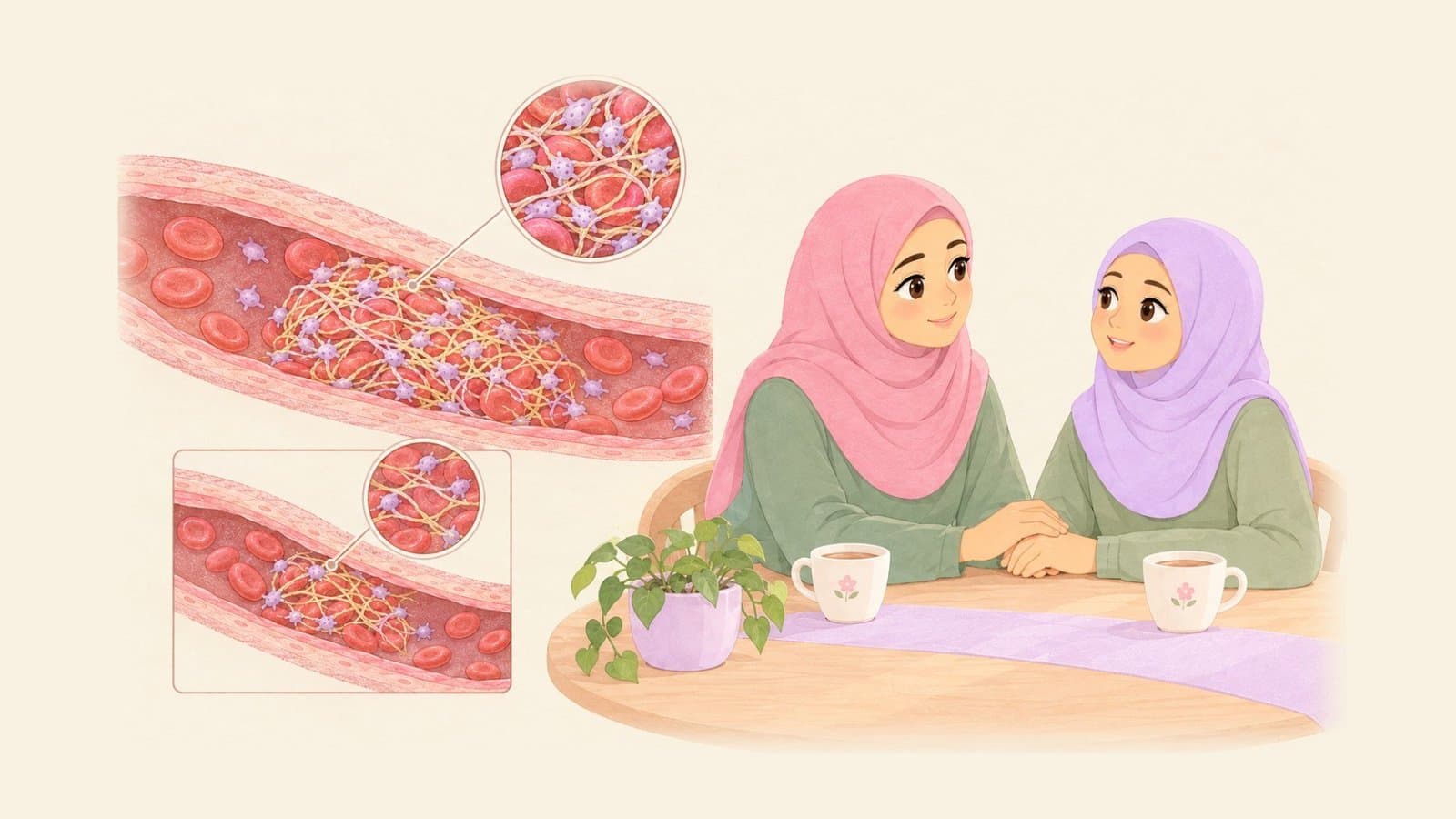
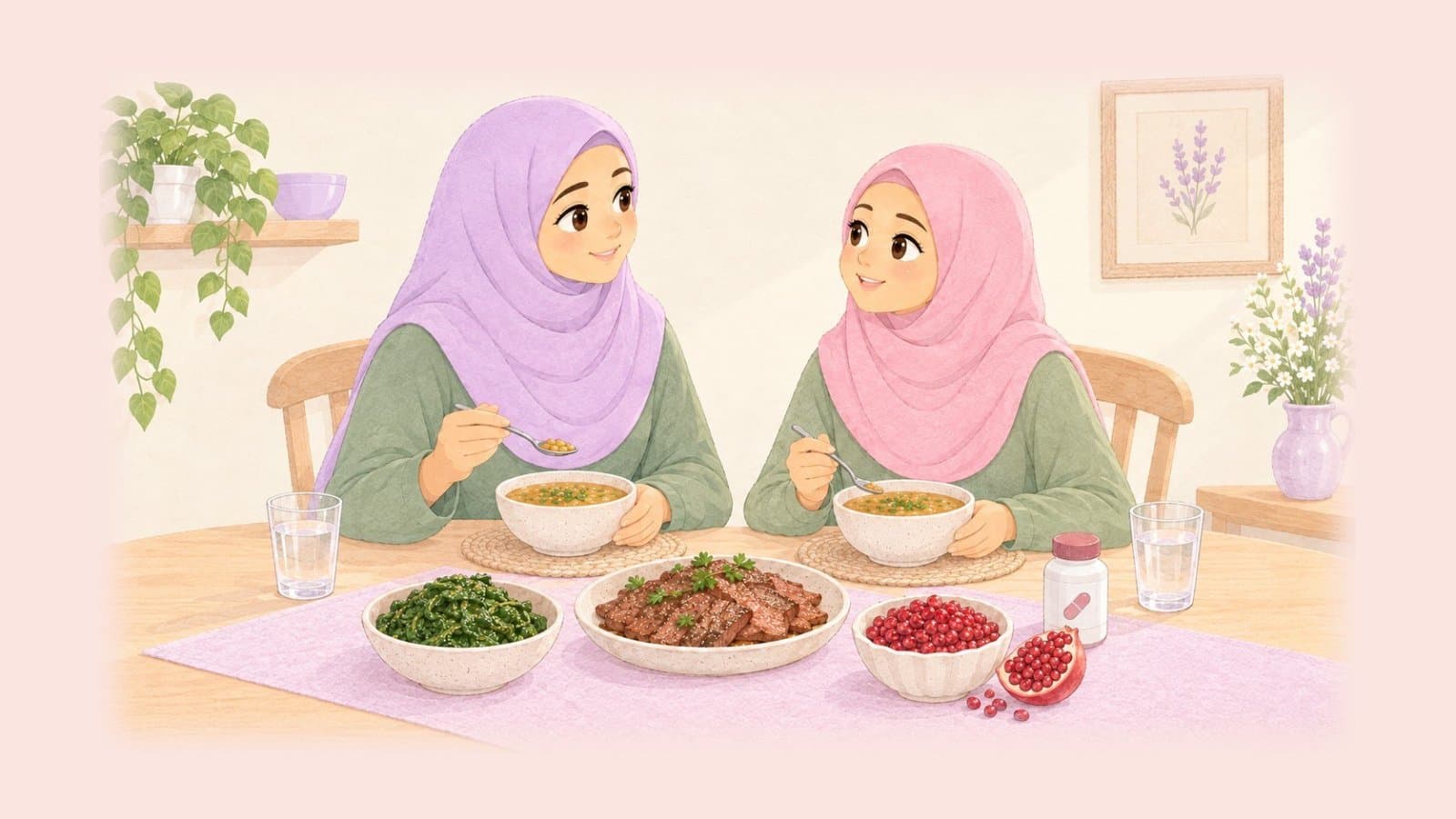
The main consequence is iron deficiency and anemia. Weakness, dizziness, pale skin, lower school performance, and hair loss in a teenager may be related to blood loss. A doctor may order a complete blood count and ferritin test, and prescribe iron supplements if there is a deficiency. Heavy periods can be treated with hormonal or non-hormonal medicines, and the doctor makes that decision together with the girl and her parents.
Your daughter can have a gentle medical evaluation
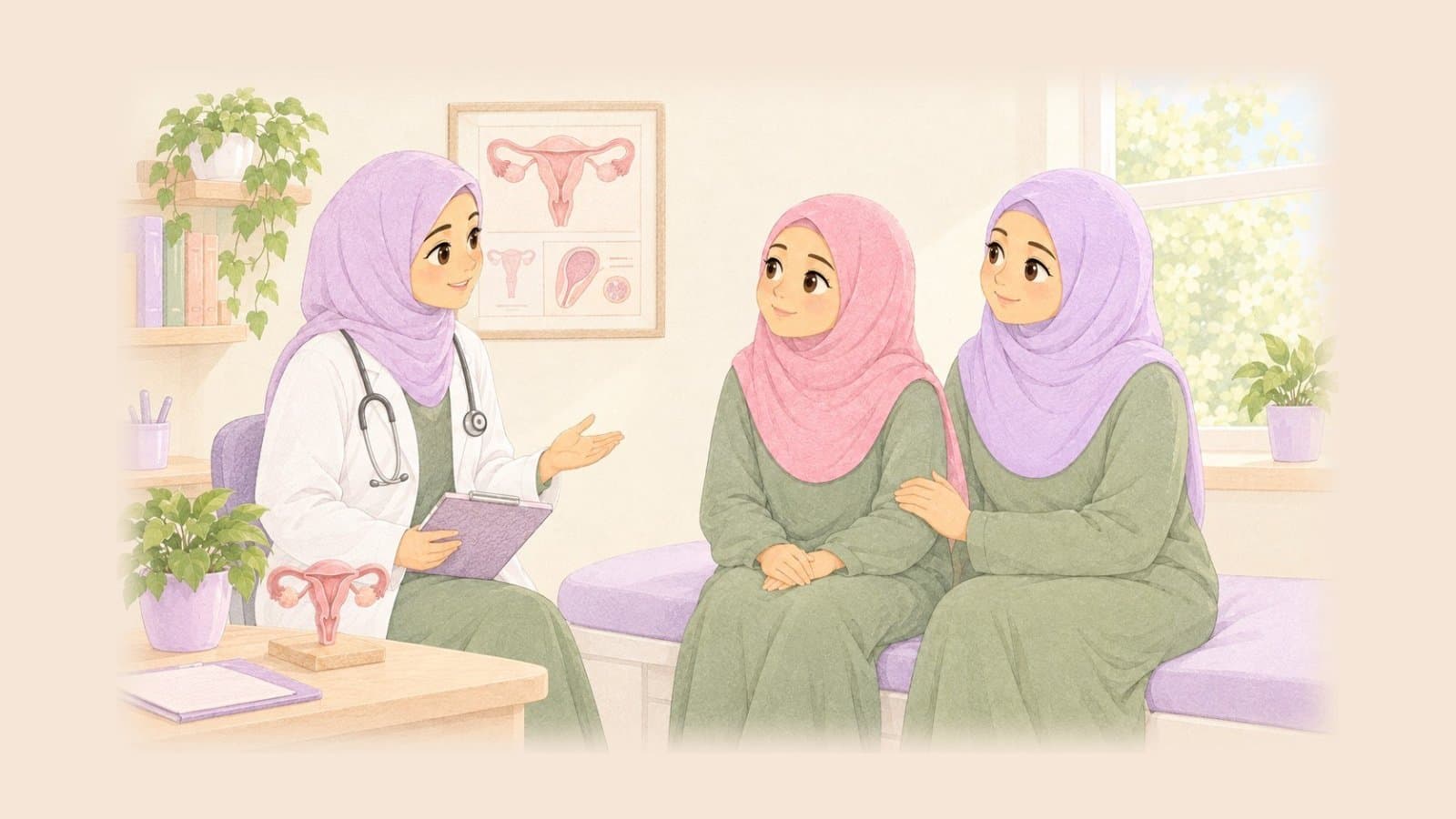
Many Muslim mothers worry that a gynecological examination could affect their daughter’s virginity. A visit usually begins with a conversation about symptoms; depending on them, the doctor may recommend blood tests or an ultrasound through the abdomen with a full bladder. An internal examination is not routine for girls who have not been sexually active: it is done only when medically necessary, with the reason explained and with consent. You can ask for a female doctor and stay with your daughter during the appointment.
Your daughter should know the rules of worship
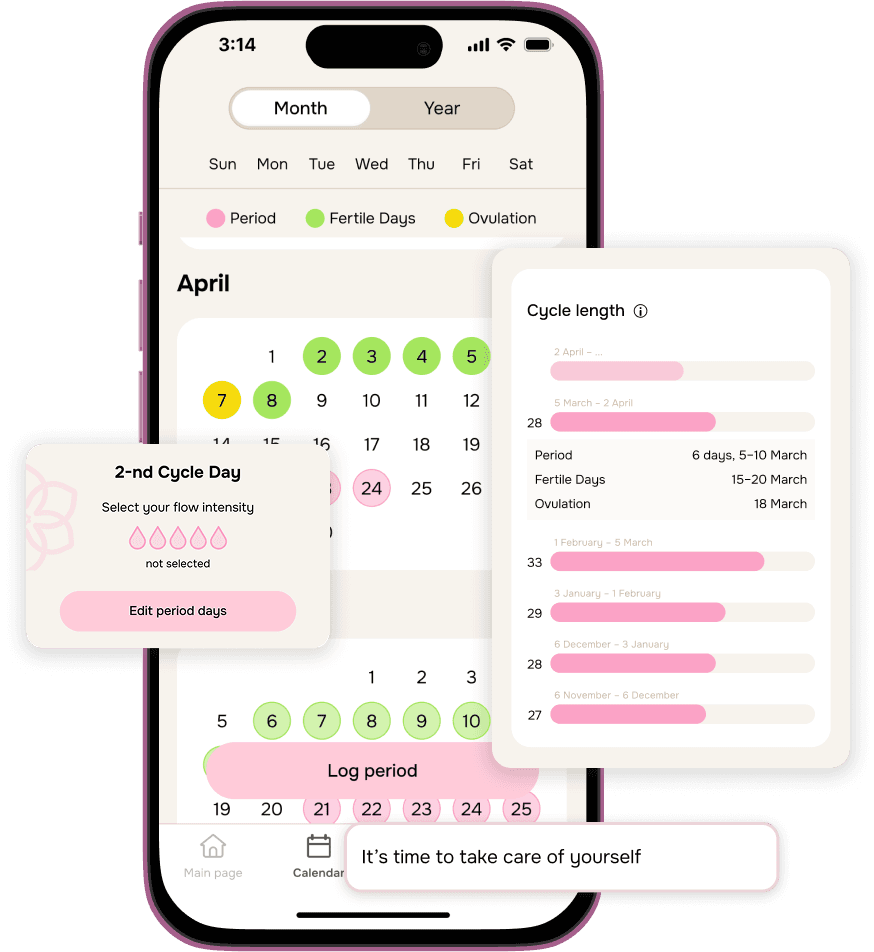
When menstruation begins, a girl becomes an adult in terms of her Islamic obligations. Explain to her in advance that she does not perform salah (prayer) during her period and does not need to make up those prayers, but she makes up missed fasting days later, as Aisha reported. When bleeding lasts a long time or is irregular, it can be difficult to tell menstruation from bleeding outside the period, because prayer may continue on those days, as the Prophet ﷺ explained to Fatimah bint Abu Hubaysh. Keep a calendar together, and ask an imam or alima (female Islamic scholar) if you’re unsure what to do.
The first few years of menstruation can be challenging, but it’s much easier for a girl when her mother is there to listen and take her to a doctor when needed. Your calm and support can be a source of strength for her throughout her life.
This article is for information only and does not replace advice from a doctor. If something worries you, talk to a healthcare professional.