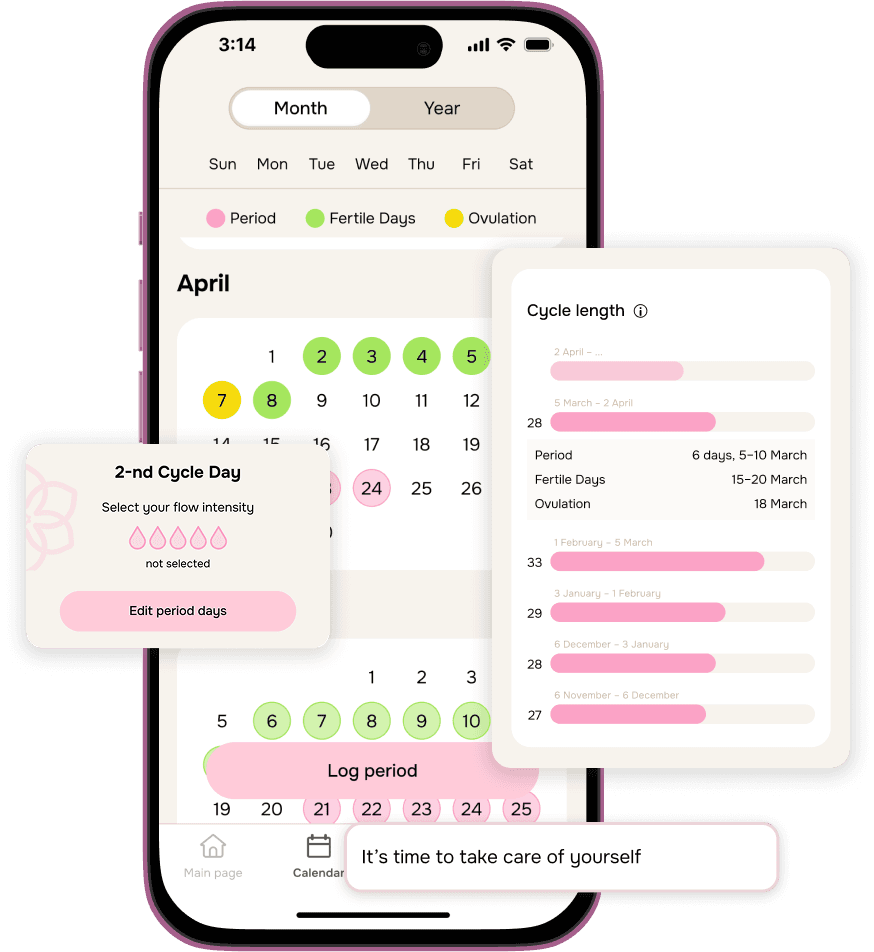
How hormones shape your cycle and mood
Learn how hormones change throughout the menstrual cycle, why they can affect mood, and when hormone tests may be helpful.
Published Updated 3 min read
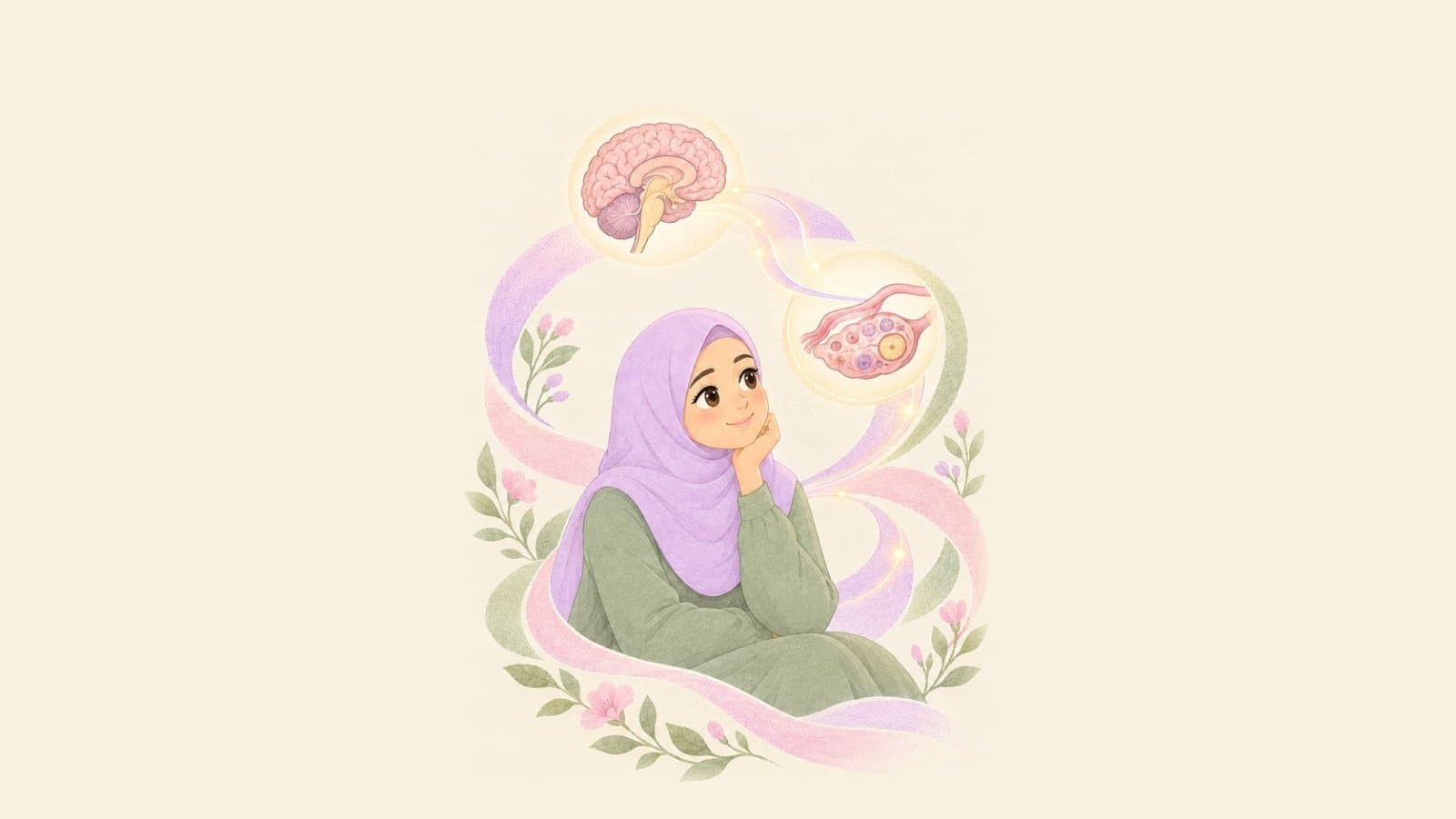
We cry at an advert, get irritable for no clear reason, and then feel calm again a couple of days later. It’s often all put down to “hormones,” without saying which hormones or why. Let’s look at which hormones regulate the menstrual cycle, how they change from phase to phase, and why some women find these shifts easy to manage while others find them difficult.
The cycle is controlled by a link between the brain and ovaries
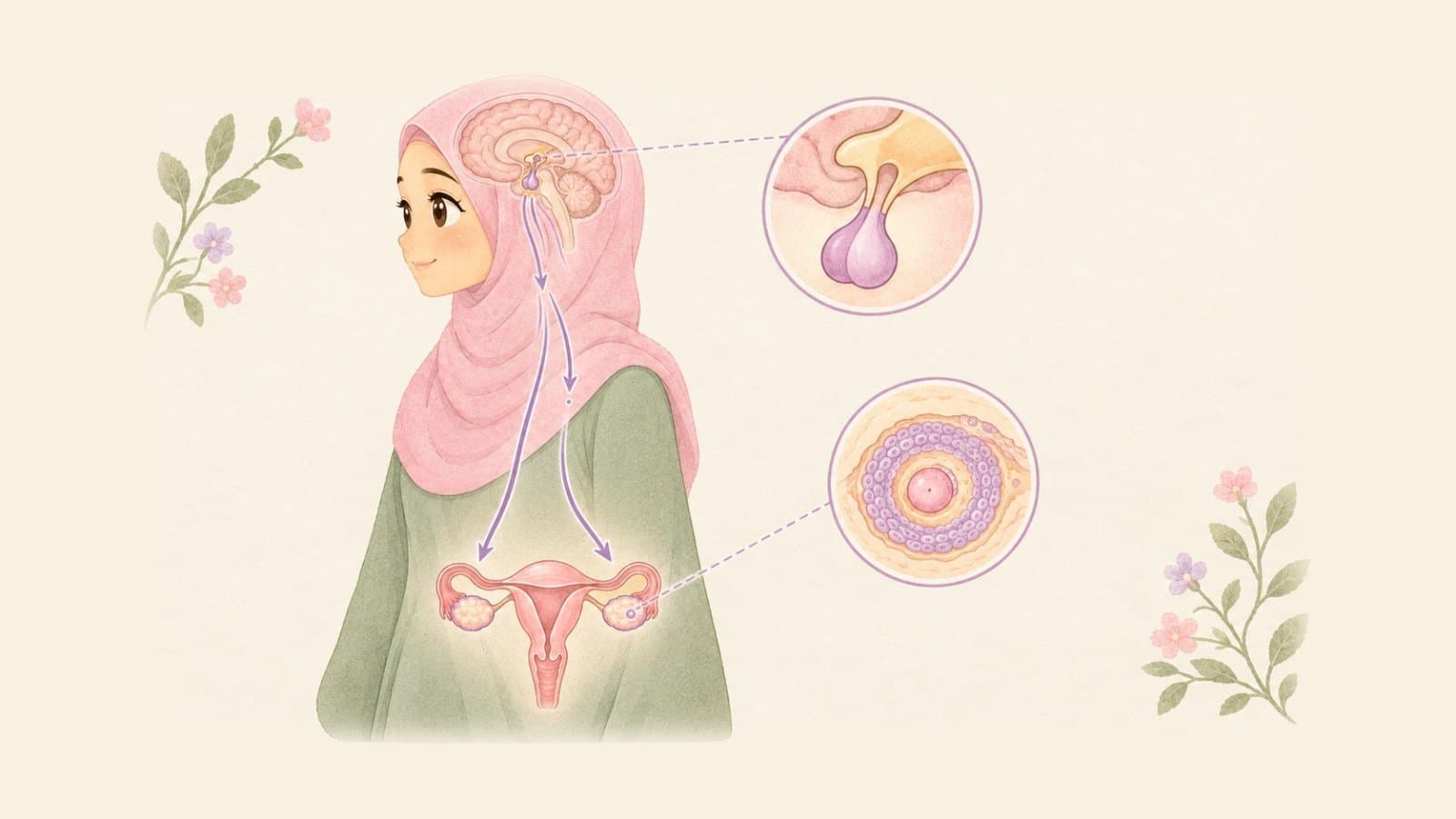
The brain sends the signals. The hypothalamus produces gonadotropin-releasing hormone, and the pituitary gland responds by releasing 2 hormones. Follicle-stimulating hormone (FSH) helps a follicle containing an egg mature, while luteinizing hormone (LH) triggers ovulation. The ovaries produce estrogen and progesterone, and these hormones in turn signal to the brain what is happening.
If something disrupts this system—because of stress, not getting enough energy, thyroid disease, or polycystic ovary syndrome—the cycle can change too.
Each phase of the cycle has its own hormone pattern
- At the start of the cycle, during your period, estrogen and progesterone levels are low.
- In the first half of the cycle, the growing follicle produces more and more estrogen. The uterine lining thickens, and some women may feel more energetic.
- Just before ovulation, estrogen reaches its peak, and a sharp surge in LH triggers the release of an egg.
- In the second half of the cycle, the corpus luteum produces progesterone, which prepares the uterus for a possible pregnancy. Your body temperature rises slightly.
- If pregnancy does not occur, the corpus luteum stops working, estrogen and progesterone levels fall, and your period begins.
Mood changes depend on how sensitive you are to hormones
For a long time, people thought PMS happened when someone had “abnormal” hormone levels. A study published in the New England Journal of Medicine showed something different. Estrogen and progesterone levels in women with PMS were the same as in other women. What differed was how their brains responded to the usual fluctuations in these hormones. When researchers temporarily “switched off” ovarian function, PMS symptoms disappeared. When the hormones returned, the symptoms came back—but only in women with PMS.
This is an important finding. Severe PMS is not made up, and it does not mean you have a weak character. It reflects how your body responds, and it can and should be treated.

Hormone tests are done when there is a medical reason
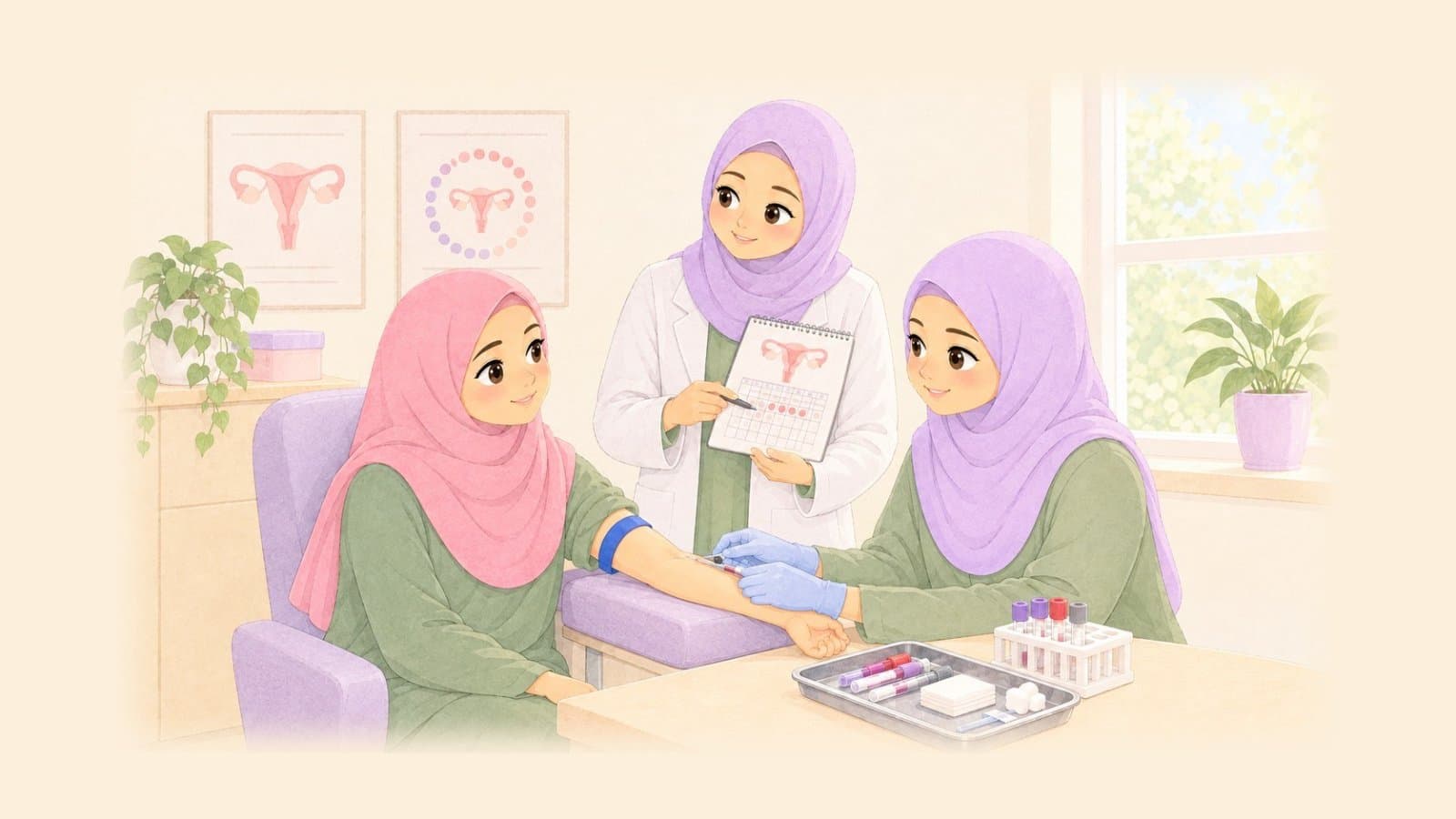
There is no point in testing “all your hormones” just in case. Hormone levels change from day to day, and without a clear reason for testing, the results may only cause confusion. If there is a reason, your doctor will order specific tests; some need to be done on a particular day of your cycle. This may be because your cycle is irregular, your periods have stopped, there is a concern about polycystic ovary syndrome, or you are having difficulty conceiving.
Fasting can affect how you feel too
During Ramadan, sleep and eating routines change, and some women notice that their cycle behaves differently. A 2026 review of studies describes these changes as usually mild and temporary, without noticeable shifts in sex hormone levels. If your cycle changes significantly or stays irregular during Ramadan, it is a good idea to see a doctor.
The days before your period may feel harder during a fast because of hunger, thirst, and lack of sleep. A nourishing suhoor, enough water between iftar and suhoor, and a daytime rest, if possible, can help. Being patient during these days is also part of worship, and there is nothing wrong with being gentle with yourself too.
Hormones are not in charge of your life; they are a natural part of it. Understanding what is happening in your body can make it easier to notice patterns, plan your activities, and ask the people close to you for support. If mood changes are getting in the way of your life, tell your doctor—help is available.
This article is for information only and does not replace advice from a doctor. If something worries you, talk to a healthcare professional.