How does the womb change during pregnancy?
In 9 months, the womb grows from the size of a small pear to an organ that holds the baby, placenta and amniotic fluid. Learn how it changes and what you may feel.
Published 3 min read
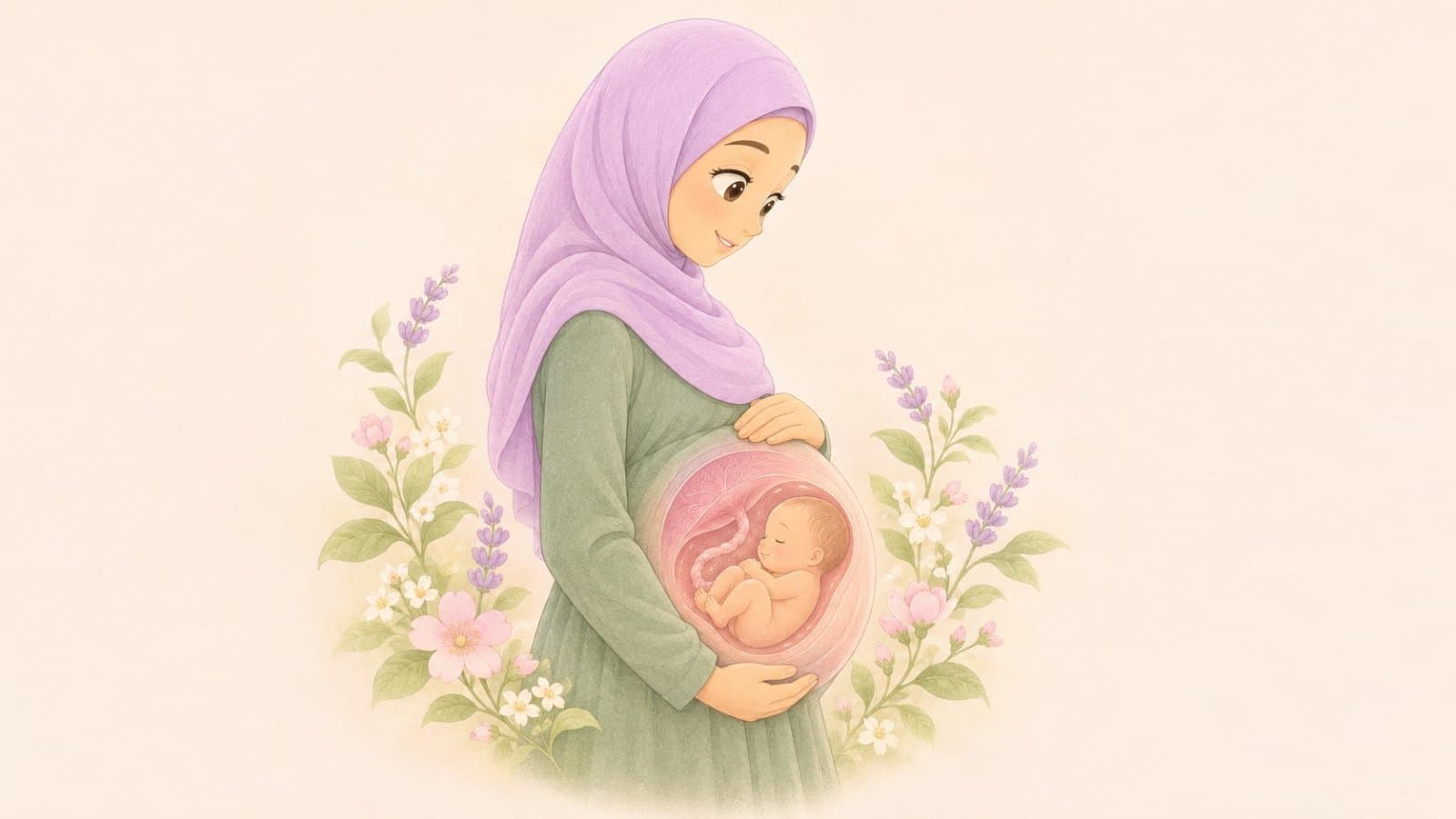
Before pregnancy, the womb is a small muscular organ hidden deep in the pelvis. In just a few months, it becomes the baby’s first home, stretches far up into the abdomen and then, after birth, returns almost to its original size. Few organs in the human body can change so much.
The womb’s capacity grows about 500 times
According to the medical reference StatPearls, during pregnancy the womb grows from about 70 grams to 1,100 grams, and its capacity increases from about 10 milliliters to 5 liters. That is about 500 times more space than before pregnancy.
This growth happens mainly because the muscle fibers become longer and thicker under the influence of hormones. Blood flow to the womb also increases greatly, so it can supply the placenta and the baby with everything they need.
How the womb rises month by month
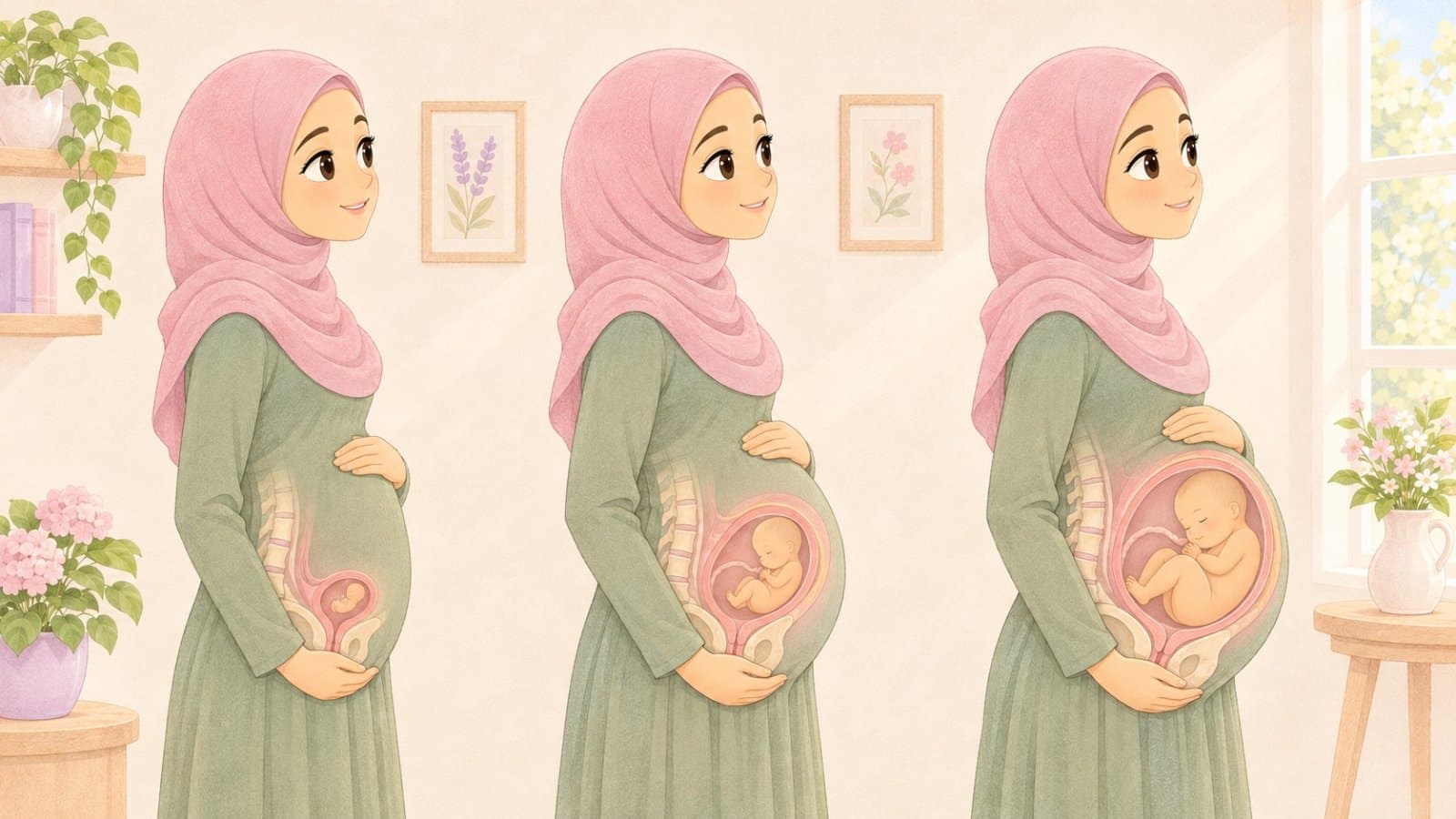
In the first weeks, the womb stays within the pelvis, and the belly is barely visible. Around the end of the first trimester, it grows too large to stay there and begins to rise into the abdomen. Around 20 weeks, the top of the womb usually reaches the level of the navel. Towards the end of pregnancy, it comes close to the ribs.
At checkups, the doctor or midwife may measure the distance from the pubic bone to the top of the womb. This measurement helps track the baby’s growth between scans.
What you may feel
As the womb grows, it presses on nearby organs and stretches its supporting ligaments. You may notice:
- a mild pulling or aching feeling at the sides of the lower abdomen, especially when you stand up quickly;
- a need to urinate more often;
- heartburn and a feeling of fullness after small meals in later pregnancy;
- shortness of breath when the womb rises higher;
- painless tightenings of the belly, often called practice contractions.
These sensations are usually normal. Seek help immediately if pain is severe or constant, if you have vaginal bleeding or fluid leaking, or if your baby moves less than usual.
After birth, the womb returns to its size
After the baby and placenta are born, the womb begins to contract. In the first days, these contractions may feel like period cramps, especially during breastfeeding. Over about 6 weeks, the womb gradually returns almost to its pre-pregnancy size.
The womb in Islamic tradition
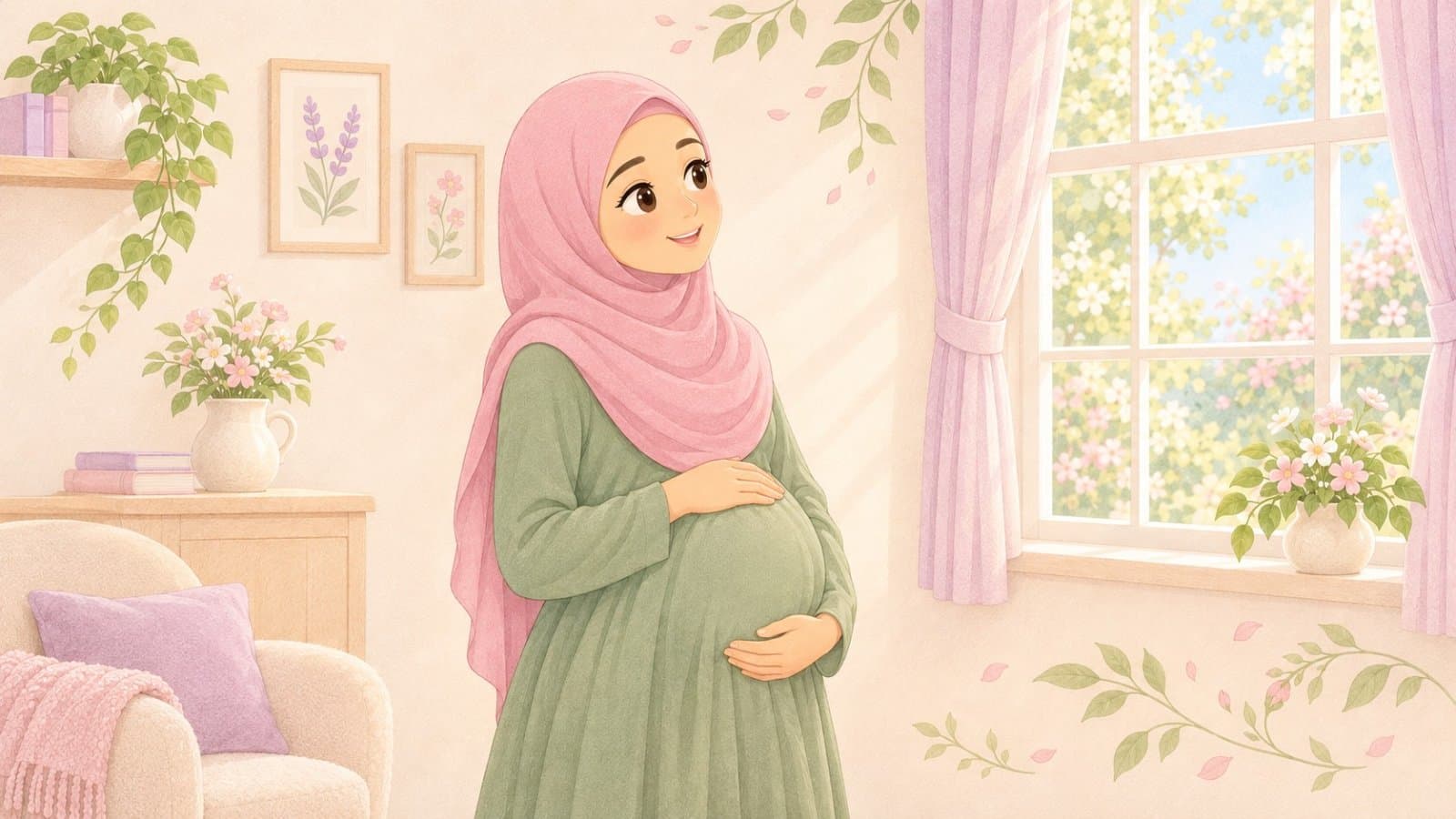
In Arabic, the womb is called rahim, a word that shares its root with rahma, mercy, and with Allah’s names ar-Rahman and ar-Rahim. In a hadith qudsi reported by at-Tirmidhi and Abu Dawud, Allah says that He created the rahim and named it after His own name. The same word is used for family ties, and Islam calls on believers to maintain them.
The Quran describes how Allah creates people in their mothers’ wombs “one development after another, in three layers of darkness” in Surah Az-Zumar (39:6). These texts remind us that pregnancy is a time worthy of care and respect.
Your womb does tremendous work during these months. Listen to your body, rest when you need to and don’t hesitate to ask your doctor about any sensations that worry you.
This article is for information only and does not replace advice from a doctor. If something worries you, talk to a healthcare professional.