How are pregnancy weeks and trimesters counted, and what happens in each one?
Pregnancy lasts about 40 weeks and is divided into 3 trimesters. Learn how the weeks are counted and what usually happens to you and your baby in each stage.
Published 4 min read

People often say that pregnancy lasts 9 months, but doctors count it in weeks. Weeks are more precise, and most checkups, tests and scans are planned according to them. To make it easier to follow, the 40 weeks are divided into 3 parts called trimesters.
Weeks are counted from your last period
Pregnancy weeks are counted from the first day of your last menstrual period, not from conception. That is why in the first 2 weeks of this count there is no pregnancy yet. A full-term pregnancy lasts about 40 weeks, and birth is considered timely anywhere between 37 and 42 weeks.
Calculating in months is confusing because months have different lengths. Forty weeks is a little more than 9 calendar months, so doctors use weeks to avoid errors.
Trimester boundaries differ slightly
Different sources divide trimesters a little differently. The NHS week-by-week guide, for example, places the second trimester from week 13 to week 27 and the third from week 28. Other guides describe the first trimester as weeks 1 to 13, the second as weeks 14 to 26 and the third as week 27 until birth. The difference is small, and it doesn’t affect your care.
The first trimester is the time of formation
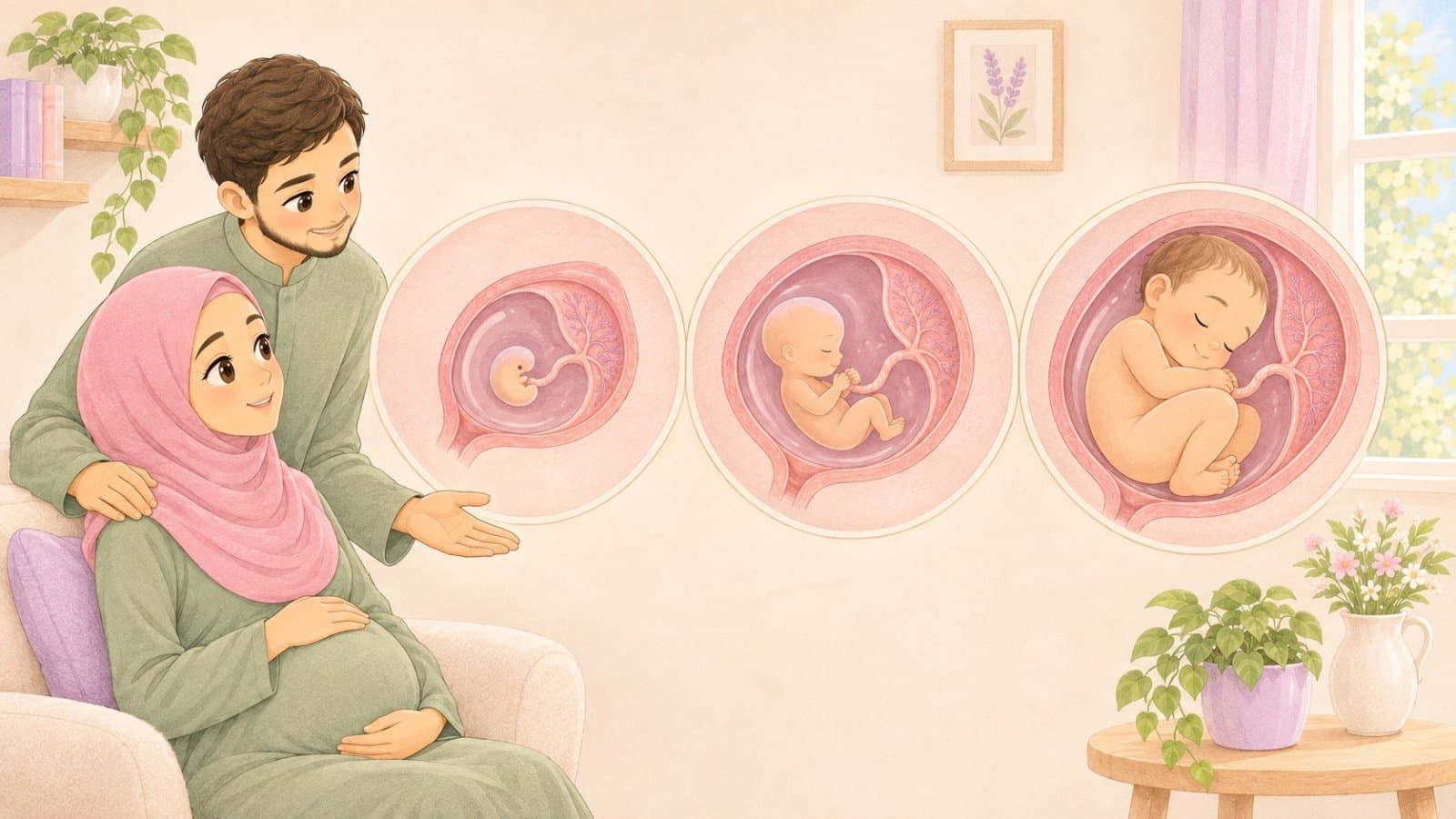
In the first weeks, the baby’s organs begin to form, the heart starts beating, and the placenta develops. For many women, this is the most tiring period. Nausea, sleepiness, breast tenderness and frequent urination are common, although the belly is barely visible.
Key steps in the first trimester:
- taking folic acid every day;
- the first appointment with a doctor or midwife, usually at 8 to 12 weeks;
- a dating scan at around 11 to 14 weeks, which confirms how far along you are.
The second trimester often feels easier
For many women, nausea fades and energy returns in the second trimester. The belly becomes visible, and between 16 and 24 weeks you will probably feel your baby move for the first time. In a first pregnancy, movements are often felt a little later than in the following ones.
In this trimester, most women are offered a detailed scan at about 18 to 21 weeks to check the baby’s development. Some women also have a glucose test for gestational diabetes at 24 to 28 weeks.

The third trimester is preparation for birth
In the last weeks, the baby gains weight, and its lungs mature. You may feel heavier and more tired, have heartburn, back pain, swelling of the feet or difficulty sleeping. Appointments become more frequent so that your doctor can check your blood pressure, the baby’s growth and position.
This is a good time to prepare a hospital bag, discuss your birth plan and learn the signs of labor. Pay attention to your baby’s movements. If they become less frequent or change, contact your maternity unit immediately and don’t wait until the next day.
Concessions in worship during pregnancy
Islam considers a pregnant woman’s condition. A hadith reported by an-Nasa’i says that Allah has waived fasting for pregnant and breastfeeding women, which means they may postpone it and make it up later. According to a hadith in Sahih al-Bukhari, prayer can be performed sitting, or lying on your side, if standing is too hard. Details of how to make up missed fasts depend on the school of thought, so ask an imam (Islamic religious leader) or an alima (female Islamic scholar).

Each trimester brings its own changes and its own tasks. You don’t have to know everything at once. Follow your pregnancy week by week, ask questions at checkups and give yourself time to rest.
This article is for information only and does not replace advice from a doctor. If something worries you, talk to a healthcare professional.